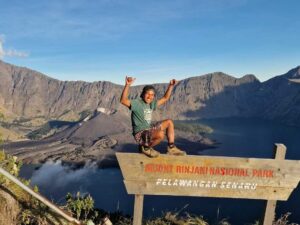
The Senaru route is another popular starting point for trekking Mount Rinjani, located on the northern side of the volcano. It’s known for its lush forests, varied landscapes, and the beautiful Segara Anak Lake along the way. Here’s a closer look at what to expect from the Senaru starting point:
Key Highlights of the Senaru Route
- Dense Rainforest: Unlike the open grasslands of the Sembalun route, Senaru begins at around 600 meters with a trail that winds through dense tropical rainforest. This section is cooler, shaded, and full of diverse flora and fauna, giving trekkers a different perspective of Rinjani’s ecosystem.
- Challenging Ascent: While Senaru is considered slightly less direct than the Sembalun route, it does require a steady climb through steeper paths, particularly as you approach the Senaru Crater Rim. The continuous upward hike makes this a challenging but scenic trail.
- Segara Anak Lake Access: The Senaru route is ideal for those looking to reach Segara Anak, the stunning volcanic lake nestled within the crater. From the lake, trekkers can take in views of Mount Baru Jari, the active cone within the caldera. Many trekkers camp by the lake for an immersive experience.
- Crater Rim Camping: Similar to the Sembalun route, many trekkers camp at the Senaru Crater Rim. Although this route doesn’t go directly to the summit, the crater rim offers breathtaking views of Segara Anak Lake, the summit in the distance, and beautiful sunsets.
- Suitable for Moderate Trekkers: The Senaru route is often chosen by trekkers who may not aim for the summit but want to experience Rinjani’s natural beauty, particularly the lake and crater rim.
- Weather and Best Season: The best time to trek the Senaru route is from May to October, as this is the dry season, providing safer and more pleasant conditions. The trail can become very slippery and challenging during the rainy season (November to April), and some portions may be closed.
The Senaru route is ideal for those seeking a more gradual climb that allows them to immerse themselves in the diverse landscapes of Rinjani, from lush forests to volcanic lakes. While it doesn’t take you directly to the summit, the route is rich with rewarding views and experiences for trekkers.